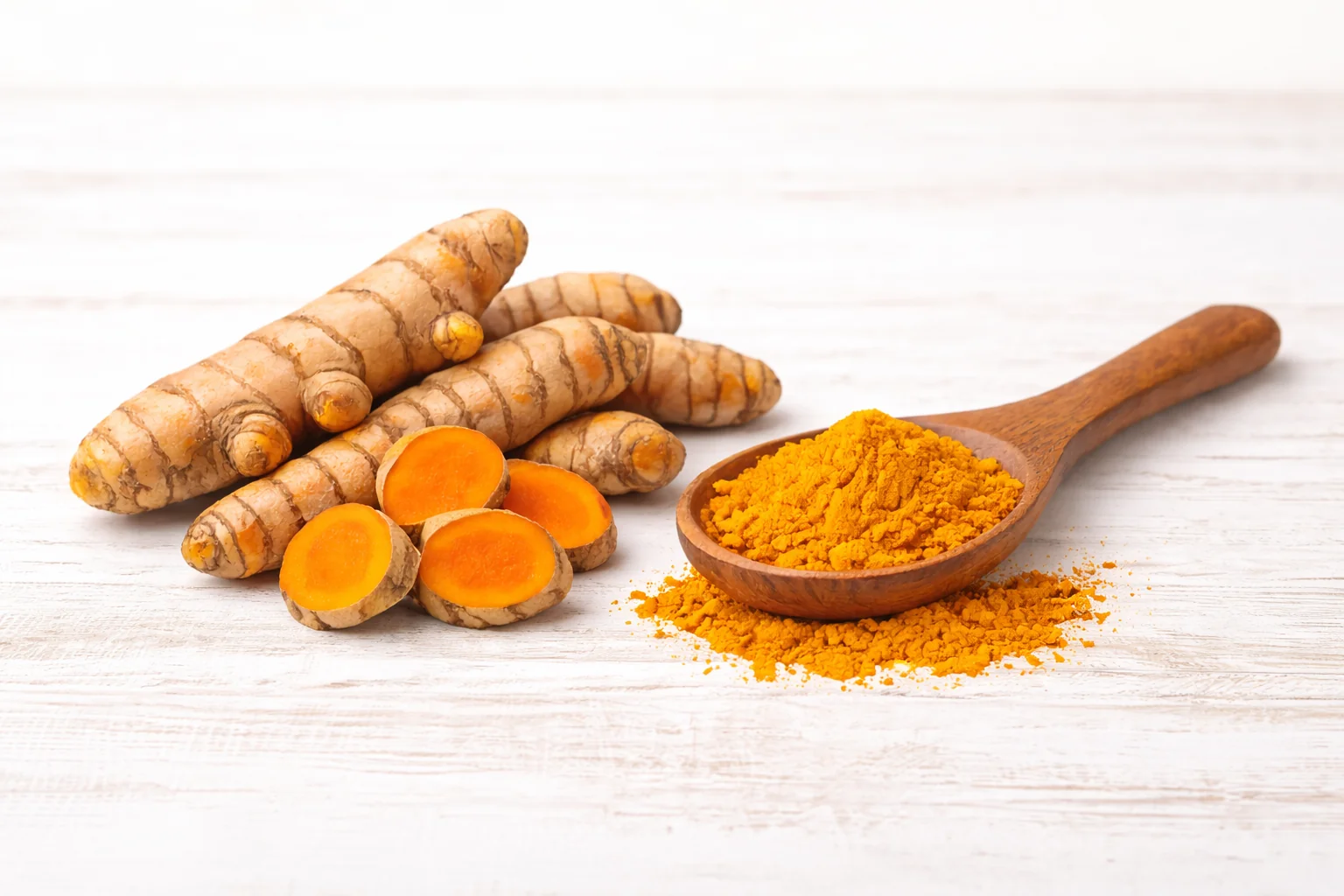
Understanding Turmeric and Joint Health
Turmeric (Curcuma longa) is a golden-yellow spice that has been used in traditional Indian Ayurvedic medicine for thousands of years to treat inflammatory conditions. Modern science has validated these traditional uses, revealing that turmeric contains powerful anti-inflammatory and antioxidant compounds that can significantly benefit joint health.
What Makes Turmeric Effective for Joints?
The active compounds in turmeric are called curcuminoids, with curcumin being the most important. Curcumin comprises about 3-5% of turmeric powder and is responsible for most of turmeric's health benefits.
Curcumin's effects on joints:
- Blocks inflammatory enzymes (COX-2, LOX) similar to NSAIDs
- Reduces production of inflammatory cytokines (IL-6, TNF-alpha)
- Acts as powerful antioxidant, protecting joint tissues
- May slow cartilage degradation
- Reduces pain signals to the brain
- Improves joint mobility and function
Types of Joint Conditions Turmeric May Help
- Osteoarthritis: The most common form, wear-and-tear arthritis
- Rheumatoid arthritis: Autoimmune inflammatory arthritis
- Post-exercise joint pain: Exercise-induced inflammation
- General joint stiffness: Age-related joint discomfort
- Sports injuries: Acute and chronic joint inflammation
The Science: How Turmeric Reduces Joint Pain and Inflammation
Understanding how turmeric works helps explain why it's so effective for joint health.
1. Inhibits Inflammatory Pathways
Curcumin blocks NF-kB, a molecule that triggers inflammatory responses in cells. NF-kB activation is a key driver of chronic inflammation in arthritic joints. By blocking NF-kB, curcumin prevents the cascade of inflammatory processes that cause joint pain and damage.
2. Reduces Inflammatory Enzymes
Curcumin inhibits COX-2 and 5-LOX enzymes that produce prostaglandins and leukotrienes—inflammatory chemicals that cause pain and swelling. This is the same mechanism used by NSAIDs like ibuprofen and aspirin, but curcumin does it naturally without the gastric side effects.
3. Lowers Inflammatory Markers
Studies show curcumin reduces blood levels of:
- CRP (C-reactive protein): General inflammation marker
- IL-6 (Interleukin-6): Pro-inflammatory cytokine
- TNF-alpha: Tumor necrosis factor, key in rheumatoid arthritis
4. Powerful Antioxidant Effects
Oxidative stress damages joint cartilage and increases inflammation. Curcumin is a potent antioxidant that:
- Neutralizes free radicals directly
- Boosts your body's own antioxidant enzymes
- Protects cartilage cells from oxidative damage
5. May Slow Cartilage Breakdown
Research suggests curcumin may inhibit enzymes (MMPs - matrix metalloproteinases) that break down cartilage in osteoarthritis, potentially slowing disease progression.
Clinical Research: What Studies Show About Turmeric for Arthritis
Numerous clinical trials have investigated turmeric and curcumin for joint pain. Here are key findings:
Landmark Studies
1. Turmeric vs. Ibuprofen for Knee Osteoarthritis (2014)
Published in Clinical Interventions in Aging, this study compared curcumin extract (1,500mg daily) to ibuprofen (1,200mg daily) in patients with knee osteoarthritis over 4 weeks.
Results:
- Both groups experienced similar pain reduction
- Both groups improved equally in physical function
- Curcumin group had fewer GI side effects
- Conclusion: Curcumin as effective as ibuprofen for osteoarthritis pain
2. Highly Bioavailable Curcumin for Knee Osteoarthritis (2016)
Study in Journal of Medicinal Food tested a bioavailable curcumin formulation (1,000mg daily) for 90 days.
Results:
- 58% reduction in pain scores
- 300% improvement in joint function
- Significantly reduced need for rescue pain medication
- No adverse effects
3. Turmeric for Rheumatoid Arthritis (2012)
A pilot study in Phytotherapy Research compared curcumin (500mg daily) to diclofenac sodium (50mg daily) in rheumatoid arthritis patients.
Results:
- Curcumin group showed highest improvement in disease activity scores
- Better reduction in joint swelling and tenderness
- No adverse events in curcumin group
- Diclofenac group had some GI issues
Meta-Analyses and Systematic Reviews
A 2016 systematic review of 8 randomized controlled trials concluded that curcumin extract (1,000mg daily with enhanced bioavailability) provides significant pain relief and improved function in osteoarthritis, with effects comparable to NSAIDs.
Optimal Dosage for Joint Pain Relief
Dosing turmeric correctly is crucial for effectiveness. Here's what research shows:
Standard Turmeric Powder (3-5% Curcumin)
Dosage: 1-3 grams (about 1/2 - 1 1/2 teaspoons) daily, divided into 2-3 doses
Note: Due to poor absorption, very high doses of turmeric powder are needed for therapeutic effects. Most people prefer standardized curcumin extracts.
Curcumin Extract Supplements (Recommended)
Standard curcumin extract (95% curcuminoids):
- Dosage: 500-1,000mg, 2-3 times daily (1,000-3,000mg total)
- With meals: Better absorption and reduced GI upset
- With black pepper: Essential for absorption (see section below)
Enhanced bioavailability formulations:
- Dosage: 500-1,000mg daily (lower dose needed due to better absorption)
- Forms: Curcumin with piperine, liposomal curcumin, curcumin phytosome (Meriva), BCM-95
Dosage by Condition
Mild joint discomfort: 500-1,000mg curcumin extract daily
Moderate osteoarthritis: 1,000-1,500mg curcumin extract daily
Severe arthritis pain: 1,500-2,000mg curcumin extract daily (divided doses)
Rheumatoid arthritis: 500-1,000mg curcumin extract daily (under medical supervision)
💊 Recommended Turmeric Supplements for Joints
Curcumin with BioPerine (Black Pepper Extract)
• 500-1,000mg curcumin + 5-10mg piperine
• Most affordable enhanced absorption option
• Take 2-3 times daily with meals
• Standardized to 95% curcuminoids
Meriva (Curcumin Phytosome)
• Phospholipid-bound curcumin
• 29x better absorbed than standard curcumin
• 500-1,000mg daily
• Extensively researched for joint health
BCM-95 (Bio-Curcumin)
• Curcumin with turmeric essential oils
• 7x better absorption
• 500-1,000mg daily
• Retains more whole-plant benefits
Organic Turmeric Powder
• For cooking and golden milk
• Use 1-3 teaspoons daily
• Always combine with black pepper and fat
• Best for preventive use
Best Forms of Turmeric for Maximum Absorption
Curcumin is notoriously poorly absorbed. Only about 1% of curcumin from regular turmeric powder enters your bloodstream. Enhanced formulations solve this problem.
Standard Curcumin Extract + Piperine (Black Pepper)
Absorption boost: 2,000% (20x)
How it works: Piperine inhibits enzymes that break down curcumin in the intestines and liver, allowing much more to enter the bloodstream.
Best for: Most people; affordable and effective
Curcumin Phytosome (Meriva)
Absorption boost: 29x better than standard curcumin
How it works: Curcumin bound to phospholipids (from sunflower or soy lecithin) creates tiny spheres that are easily absorbed through intestinal walls.
Best for: Those seeking maximum absorption; extensively studied for osteoarthritis
BCM-95 (Bio-Curcumin)
Absorption boost: 7x better than standard curcumin
How it works: Contains turmeric essential oils that enhance absorption and provide additional benefits.
Best for: Those wanting whole-plant benefits, not just isolated curcumin
Liposomal Curcumin
Absorption boost: Highly variable, potentially very high
How it works: Curcumin encapsulated in tiny fat bubbles (liposomes) that protect it and deliver it directly to cells.
Best for: Those with absorption issues; often liquid form
Nano-Curcumin
Absorption boost: Can be 40x or higher
How it works: Curcumin particles reduced to nano-size for better absorption.
Best for: Maximum bioavailability, though more expensive
Why Black Pepper (Piperine) is Essential
This is one of the most important facts about turmeric supplementation: curcumin alone is very poorly absorbed.
The Absorption Problem
When you consume curcumin, three things happen that limit absorption:
- Poor intestinal absorption: Curcumin doesn't dissolve well in water
- Rapid metabolism: Liver enzymes quickly break down curcumin
- Quick elimination: What little is absorbed is rapidly excreted
Result: Only about 1% of oral curcumin reaches your bloodstream.
The Black Pepper Solution
Black pepper contains piperine, which:
- Inhibits enzymes that metabolize curcumin
- Increases intestinal absorption
- Boosts curcumin bioavailability by 2,000%
A landmark 1998 study found that 20mg of piperine combined with 2 grams of curcumin increased bioavailability by 2,000%. This is why virtually all quality turmeric supplements now include piperine.
How Much Black Pepper Do You Need?
In supplements: Look for 5-20mg piperine (or "BioPerine®") per dose
With turmeric powder/food: Add 1/4 teaspoon freshly ground black pepper per teaspoon of turmeric
Critical: Always take turmeric with black pepper unless using a pre-formulated enhanced absorption product (phytosome, BCM-95, etc.)
Combining Turmeric with Other Joint Supplements
Turmeric works well with other joint-supporting supplements. These combinations can provide synergistic benefits.
Turmeric + Glucosamine & Chondroitin
Why combine: Different mechanisms—turmeric reduces inflammation while glucosamine/chondroitin support cartilage structure.
Dosage:
- Curcumin: 1,000mg daily
- Glucosamine sulfate: 1,500mg daily
- Chondroitin sulfate: 1,200mg daily
Turmeric + Omega-3 Fatty Acids
Why combine: Both are anti-inflammatory but work through different pathways.
Dosage:
- Curcumin: 1,000mg daily
- Fish oil (EPA+DHA): 2,000-3,000mg daily
Turmeric + Boswellia (Frankincense)
Why combine: Boswellia inhibits 5-LOX enzyme; turmeric inhibits COX-2. Together they block multiple inflammatory pathways.
Dosage:
- Curcumin: 500-1,000mg daily
- Boswellia extract (65% boswellic acids): 300-500mg, 2-3x daily
Turmeric + Ginger
Why combine: Both from same plant family; ginger contains gingerols with similar anti-inflammatory effects.
Dosage:
- Curcumin: 1,000mg daily
- Ginger extract: 250-500mg, 2-3x daily
Turmeric + Vitamin D
Why combine: Vitamin D deficiency worsens arthritis; combined they may enhance anti-inflammatory effects.
Dosage:
- Curcumin: 1,000mg daily
- Vitamin D3: 2,000-4,000 IU daily (test levels first)
When to Expect Results from Turmeric
Understanding the timeline helps set realistic expectations and maintain consistency.
Acute Pain and Inflammation
Timeline: 1-2 weeks
For acute joint pain from exercise or minor injury, some people notice reduced pain and swelling within a few days to 2 weeks of starting high-dose curcumin (1,500-2,000mg daily).
Chronic Joint Pain (Osteoarthritis)
Timeline: 4-8 weeks for noticeable improvement
Most studies show significant pain reduction and improved function after 4-8 weeks of consistent daily use. Benefits continue to improve with longer use.
What to expect:
- Weeks 1-2: May notice slight reduction in pain, especially morning stiffness
- Weeks 3-4: More noticeable pain relief, improved mobility
- Weeks 6-8: Significant improvement in pain, stiffness, and function
- 3-6 months: Maximum benefits; some people can reduce dose for maintenance
Rheumatoid Arthritis
Timeline: 8-12 weeks
Autoimmune conditions like RA may take longer to respond. Studies typically show significant improvement after 8-12 weeks of daily use.
Factors Affecting Response Time
- Dosage: Higher doses (within safe limits) work faster
- Formulation: Enhanced absorption forms work more quickly
- Severity: Mild arthritis responds faster than severe
- Consistency: Daily use is essential; sporadic use won't work
- Individual variation: Genetics affect how you metabolize curcumin
Important: Consistency is Key
Unlike pain medications that work immediately, turmeric's anti-inflammatory effects are cumulative. You must take it daily for weeks to see benefits. Missing doses or inconsistent use significantly reduces effectiveness.
Safety, Side Effects, and Drug Interactions
Turmeric and curcumin have an excellent safety profile, but there are important considerations.
General Safety
Turmeric as a spice in food is extremely safe. Curcumin supplements in recommended doses (up to 3,000mg daily) have been used safely in studies for months to years.
Possible Side Effects
Most people tolerate turmeric very well. Occasional side effects include:
- Mild digestive upset: Nausea, diarrhea, or stomach discomfort (usually at very high doses)
- Headache: Rare
- Skin rash: Very rare allergic reaction
To minimize side effects: Take with food, start with lower doses and increase gradually, choose quality products.
Who Should Avoid or Use Caution
Gallbladder disease: Turmeric stimulates bile production. Avoid if you have gallstones or bile duct obstruction.
Bleeding disorders: Turmeric has mild blood-thinning effects. Use caution if you have bleeding disorders.
Before surgery: Stop turmeric supplements 2 weeks before scheduled surgery (blood-thinning effects).
Pregnancy/breastfeeding: Turmeric as a spice in food is safe. High-dose supplements have not been adequately studied; consult your doctor.
Iron deficiency: High doses of turmeric may reduce iron absorption. Take iron supplements separately from turmeric.
Drug Interactions
Blood thinners (warfarin, aspirin, clopidogrel): Turmeric enhances blood-thinning effects. Consult your doctor; may need monitoring.
Diabetes medications: Turmeric may lower blood sugar. Monitor glucose levels; medication adjustment may be needed.
Stomach acid reducers (PPIs, H2 blockers): Turmeric increases stomach acid production. May counteract these medications.
NSAIDs: Can be taken together, but monitor for increased side effects. Some people successfully reduce NSAID use with turmeric.
Important: Always inform your doctor about all supplements you take, especially before starting new medications or procedures.
Turmeric in Food vs. Supplements: Which is Better?
Both approaches have value, and many people use both.
Turmeric in Food
Advantages:
- Whole-plant benefits (essential oils, fiber)
- Generally safe and well-tolerated
- Adds flavor and nutrition to diet
- More affordable
- Lower risk of side effects
Disadvantages:
- Low curcumin content (3-5% in powder)
- Poor absorption without proper preparation
- Would need 1-3 teaspoons daily for therapeutic effects
- Difficult to achieve clinical trial doses from food alone
Best for: Prevention, mild symptoms, culinary enjoyment
Turmeric Supplements
Advantages:
- Standardized curcumin content (predictable dose)
- Enhanced absorption formulations available
- Easier to achieve therapeutic doses
- Convenient (no cooking required)
- Backed by clinical research at specific doses
Disadvantages:
- More expensive than powder
- Isolated curcumin may miss some whole-plant benefits
- Quality varies between brands
- Requires daily commitment
Best for: Moderate to severe joint pain, arthritis, achieving research-backed doses
The Ideal Approach: Combine Both
For active joint pain:
- Take curcumin supplements (1,000-2,000mg daily) for therapeutic effects
- Add turmeric to food for additional benefits and enjoyment
For prevention/maintenance:
- Use turmeric liberally in cooking (1-2 teaspoons daily)
- Consider lower-dose supplements (500mg curcumin) for added insurance
How to Use Turmeric in Cooking
Golden Milk: Warm milk + 1 tsp turmeric + 1/4 tsp black pepper + honey + cinnamon
Curries and stews: Add 1-2 teaspoons turmeric powder
Rice and grains: Add 1/2 teaspoon to cooking water
Smoothies: Add 1/2-1 teaspoon powder (with black pepper and healthy fat like avocado or coconut oil)
Scrambled eggs: Add 1/4-1/2 teaspoon
Critical for food use: Always combine with black pepper and fat (coconut oil, olive oil, ghee, or fatty foods) for better absorption.
Frequently Asked Questions
Get Our Free Natural Remedy Guide
Want more natural health tips? Download our comprehensive guide to 15 essential natural remedies for common health concerns.
Get Free Guide